Published on
Updated on 

How to Fix Google Earth Not Working or Won’t Load: Complete Troubleshooting Guide

Authors

Is Google Earth not working correctly on your device? Our comprehensive troubleshooting guide solves common problems like Google Earth crashing, startup failures, slow performance, and loading issues on Windows, macOS, Android, iOS, and in the browser. Follow this step-by-step troubleshooting flow to identify and resolve your specific issue.

Table of Contents

Quick Fixes: Try These First

Before diving into platform-specific solutions, try these universal fixes that resolve most Google Earth problems:

  • Restart Google Earth - Close completely and reopen the application
  • Restart your device - A simple reboot clears temporary glitches
  • Check your internet connection - Test by loading another website or app
  • Verify Google services are operational - Check Google Workspace Status Dashboard for outages
  • Update Google Earth - Ensure you're running the latest version from official sources
  • Test on another browser or device - Helps determine if the issue is system-specific
  • Temporarily disable VPN/firewall - These can sometimes block Google Earth connections

If quick fixes don't resolve your issue, continue to the platform-specific troubleshooting below.

Quick Choices: Pick Your Issue

Find your specific problem and jump to the relevant solution:

Common Google Earth Problems and Solutions

ProblemLikely CauseWhere to Find Fix
App not starting / "Not responding" on WindowsOutdated drivers, corrupted cache, missing DirectX componentsWindows PC fixes / DirectX section
Slow 3D imagery on the webHardware acceleration disabled, weak GPU, high quality settingsHardware acceleration & web settings
Lag on iPad or iPhoneLow free storage, background apps, outdated app versioniOS devices section
Crashes on AndroidInsufficient memory, app cache issues, outdated versionAndroid devices section
Black or blank globe displayGraphics driver issues, WebGL disabled, cache corruptionGraphics settings / cache clearing
Failed to fetch startup valuesNetwork restrictions, firewall blocking, proxy issuesNetwork and compatibility section

Basic Troubleshooting Algorithm for Any Device

Follow this decision tree regardless of your platform:

  1. Verify internet connectivity - Test your connection on another website or app
  2. Restart Google Earth - Close the app completely and relaunch
  3. Restart your device - Power cycle your computer, phone, or tablet
  4. Check for updates - Install the latest Google Earth version and system updates
  5. Try an alternative access method - If desktop fails, try web version or mobile; if web fails, try desktop app
  6. Follow platform-specific steps below - Continue to the detailed fixes for your operating system

Why Is Google Earth Not Working or Crashing on Windows PC?

The most common reasons why Google Earth fails to load or is not responding include:

  • Slow internet connection
  • Outdated operating system or Windows updates pending
  • Outdated PC hardware not meeting minimum requirements
  • Failed to fetch startup values error
  • Graphics driver issues or conflicts
  • Corrupted Google Earth cache or settings
  • Conflicts with antivirus or firewall software
  • Disabled WebGL in browser (for web version)
  • Missing or outdated DirectX components

Many of these problems are related to your system not meeting Google Earth's requirements or certain components being misconfigured.

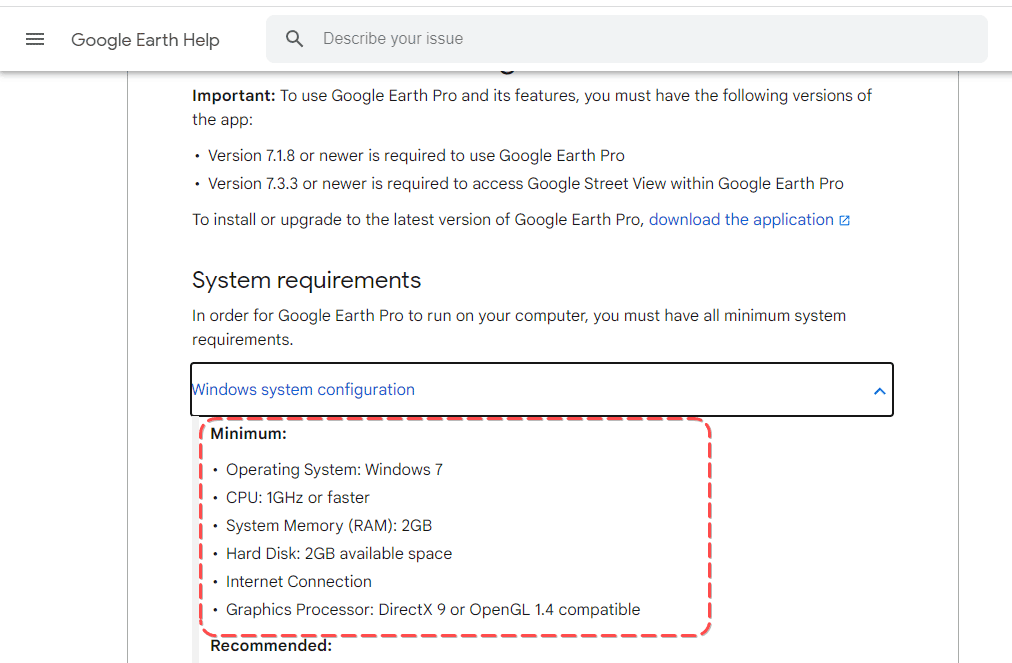
Go to the Install & uninstall page and check the minimum system requirements for Google Earth Basic and Pro versions to ensure your system qualifies.

Google Earth System Requirements

Step-by-Step Fixes for Google Earth Not Responding on Windows

If Google Earth Pro is not working or the web version won't load on Windows, follow these steps in order:

1. Update graphics drivers

  • Press Windows key + X and select Device Manager
  • Expand "Display adapters"
  • Right-click your graphics card and select "Update driver"
  • Choose "Search automatically for drivers"
  • Alternatively, download latest drivers directly from NVIDIA, AMD, or Intel websites

2. Run Google Earth as administrator

  • Right-click the Google Earth Pro shortcut
  • Select "Run as administrator"
  • If this resolves the issue, make it permanent: Right-click shortcut → Properties → Compatibility → Check "Run this program as administrator"

3. Enable compatibility mode

  • Right-click Google Earth Pro shortcut → Properties
  • Go to Compatibility tab
  • Check "Run this program in compatibility mode for:"
  • Select an earlier Windows version from dropdown
  • Click Apply and test

4. Clear Google Earth Pro cache

  • Open Google Earth Pro
  • Go to Tools → Options → Cache
  • Click "Clear disk cache" and "Clear memory cache"
  • Restart the application

5. Repair Google Earth installation

  • Download the latest Google Earth Pro installer
  • Run the installer
  • Select "Repair" option if prompted (otherwise, reinstall completely)
  • Follow on-screen instructions

6. Check Windows updates

  • Open Settings → Update & Security → Windows Update
  • Click "Check for updates"
  • Install all available updates and restart

7. Temporarily disable antivirus/firewall

  • Temporarily turn off your antivirus and Windows Firewall
  • Test if Google Earth works
  • If it does, add Google Earth to your security software's exception list
  • Re-enable security software

Google Earth Slow and Laggy on iPad and iPhone

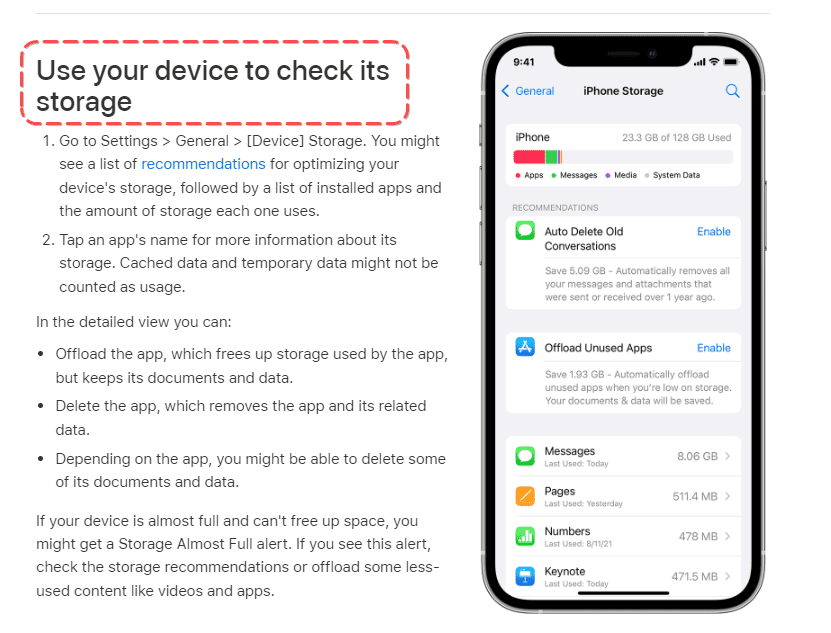
If you've downloaded Google Earth on your iPad or iPhone and the app won't load properly or runs slowly, insufficient free storage is often the root cause.

Step 1: Check free storage on your iOS device

Navigate to Settings → General → [Device Name] Storage to view available space. You need at least 1-2 GB of free storage for Google Earth to function smoothly.

iPad Storage Settings

Step 2: Free up storage if needed

If storage is low, try these methods:

  • Delete unused apps
  • Remove offline maps from other apps
  • Clear Safari cache: Settings → Safari → Clear History and Website Data
  • Delete old photos and videos (back up to cloud first)
  • Offload unused apps: Settings → General → iPhone Storage → Offload Unused Apps

Step 3: Restart your device

After clearing storage, perform a full restart:

  • Press and hold the power button and volume button
  • Slide to power off
  • Wait 30 seconds, then power back on

Step 4: Try additional iOS-specific fixes

If Google Earth is still slow or crashing:

  • Update the app: Open App Store → Search for Google Earth → Tap Update if available
  • Disable background app refresh: Settings → General → Background App Refresh → Turn off for Google Earth
  • Reset network settings: Settings → General → Reset → Reset Network Settings (note: this will forget WiFi passwords)
  • Check for iOS updates: Settings → General → Software Update
  • Reinstall Google Earth: Delete the app, restart device, reinstall from App Store
  • Disable other GPS apps: Close other apps using location services simultaneously
  • Reduce motion effects: Settings → Accessibility → Motion → Reduce Motion (ON)

Otherwise, try the other troubleshooting methods below to fix Google Earth when it's not responding.

Google Earth Issues on Android Devices

Android tablets and phones experience similar issues to iOS devices, with some platform-specific solutions:

Check storage on Android

  • Open Settings → Storage
  • You need at least 1-2 GB free for smooth operation
  • Clear space by removing unused apps, clearing app caches, or deleting media files

Android-specific fixes

  1. Clear Google Earth cache and data

    • Settings → Apps → Google Earth
    • Tap Storage
    • Select "Clear Cache" first, test the app
    • If still not working, select "Clear Data" (note: this resets app settings)
  2. Update Google Earth from Play Store

    • Open Google Play Store
    • Search for Google Earth
    • Tap Update if available
  3. Check for Android system updates

    • Settings → System → System Update
    • Install any available updates
  4. Force stop and restart

    • Settings → Apps → Google Earth
    • Tap "Force Stop"
    • Wait 10 seconds, then reopen the app
  5. Check app permissions

    • Settings → Apps → Google Earth → Permissions
    • Ensure Location permission is granted
    • Grant Storage permission if requested
  6. Disable battery optimization

    • Settings → Battery → Battery Optimization
    • Find Google Earth and set to "Don't optimize"
    • Prevents Android from limiting app resources

If problems persist on Android, try uninstalling and reinstalling Google Earth completely.

Fix Google Earth Crashing: Turn On Hardware Acceleration

Incorrect browser settings can cause Google Earth web version to keep crashing and experience lag. When Google Earth is not working properly in your browser, enable hardware acceleration to make better use of your graphics card (GPU) and CPU resources.

For Google Chrome

Step 1. Run the Chrome browser app.

Chrome Browser Icon

Step 2. Type chrome://settings/ in the address bar.
Chrome Settings URL

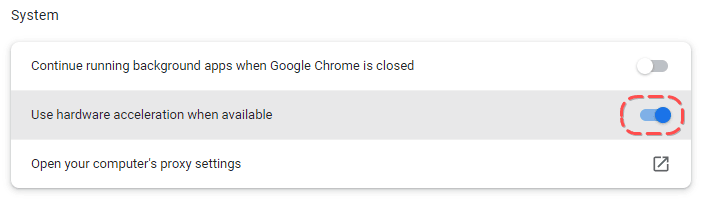
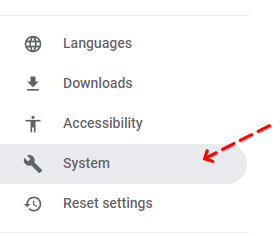
Step 3. You will get to the browser settings. Then go to the System section.

Step 4. In the System subsection activate the Use hardware acceleration when available option.

Hardware Acceleration Setting

Step 5. Restart the browser and open the web version of Google Earth.
Google Earth Web Interface

For Microsoft Edge

In Microsoft Edge, the process is similar:

  • Open Settings (click three dots → Settings)
  • Navigate to System and performance
  • Enable "Use hardware acceleration when available"
  • Restart Edge and test Google Earth

For Firefox

In Firefox:

  • Type about:preferences in the address bar
  • Scroll to Performance section
  • Uncheck "Use recommended performance settings"
  • Check "Use hardware acceleration when available"
  • Restart Firefox

Important note: If enabling hardware acceleration causes new crashes or graphical glitches, try disabling it again as a troubleshooting test. Some older graphics cards have driver issues with hardware acceleration.

This approach helps fix problems when Google Earth Pro is not working in the browser or when the standard web version is crashing on your PC or macOS. The browser will use your graphics resources to render 3D maps and WebGL content more efficiently.

Check Your DirectX Version to Fix Google Earth Pro Not Working

DirectX software is necessary for your graphics card and dependent applications to work properly on Windows. Google Earth Pro desktop application relies on DirectX for 3D acceleration and rendering. Outdated DirectX versions can cause Google Earth to fail to load or display glitches.

How to check and update DirectX

Step 1: Check your current DirectX version

  • Press Windows key + R
  • Type dxdiag and press Enter
  • The DirectX Diagnostic Tool opens
  • Check the DirectX Version listed on the System tab

Step 2: Update DirectX

DirectX typically updates through Windows Update:

  • Open Settings → Update & Security → Windows Update
  • Click "Check for updates"
  • Install all available updates
  • DirectX will update automatically if needed

Step 3: Update graphics drivers

Graphics drivers include DirectX components:

  • Visit your graphics card manufacturer's website:
    • NVIDIA: nvidia.com/Download/index.aspx
    • AMD: amd.com/en/support
    • Intel: intel.com/content/www/us/en/download-center/home.html
  • Download and install the latest driver package
  • Restart your computer

This solution is particularly effective when addressing why Google Earth Pro is not responding or when you're trying to understand why Google Earth keeps crashing on Windows machines with 3D rendering issues.

Optimize Google Earth Web Settings to Fix Loading Issues

By adjusting performance and graphics settings, you can improve Google Earth web version performance when it's not working correctly. Here's how to fix when Google Earth won't load properly in your browser:

Step 1. Open the web version of Google Earth

Step 2. Click the Settings icon (gear icon, usually in the left panel or menu)

Step 3. Look for Performance or Graphics options

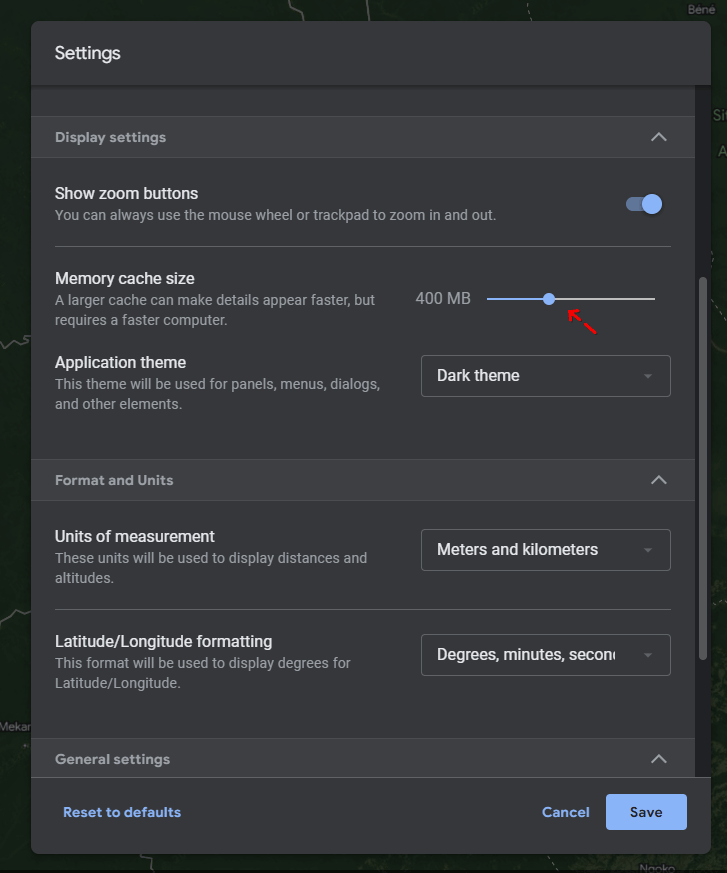
Step 4. Adjust the memory cache size or quality settings:

  • Move the slider left to lower visual quality and reduce lag on weaker hardware
  • Move the slider right for higher quality on powerful machines
Google Earth Memory Cache Settings

Step 5. Try these additional settings adjustments:

  • Disable "3D Buildings" to test if this improves loading
  • Change rendering mode if options like "OpenGL" or "DirectX" are available (try "Automatic" first)
  • Lower terrain quality if experiencing lag
  • Disable "Atmosphere" effects for better performance

Step 6. Click Save and reload the page

This is one of the most effective ways to address why Google Earth is so slow and can fix most cases when Google Earth is not loading correctly in the browser.

Use Google Maps as Alternative When Google Earth is Down

If Google Earth Pro keeps crashing due to hardware limitations or other persistent issues, consider alternative mapping solutions while troubleshooting.

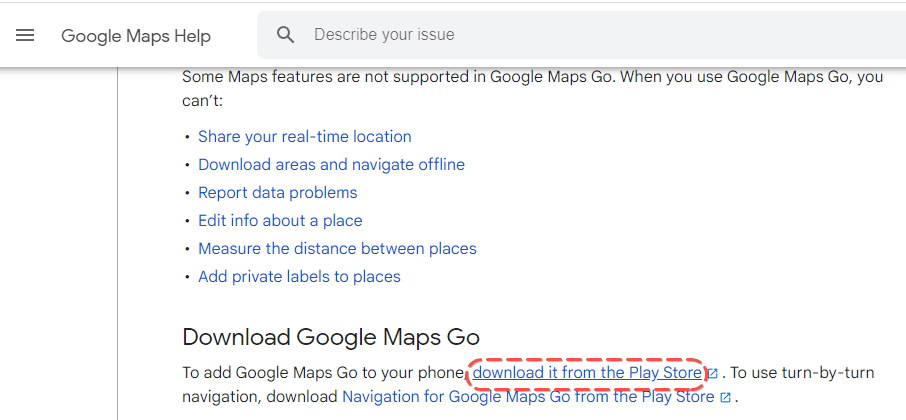
Google Maps GO (Android Only)

Google Maps GO is a lightweight Android app designed for devices with limited resources. It provides basic mapping features when Google Earth is not responding.

Key information about Google Maps GO:

  • Platform: Android only - available on Google Play Store
  • Target devices: Low-end Android phones and tablets with limited memory
  • Features: Basic navigation and mapping, but fewer 3D features than Google Earth
  • Advantages: Works on slow connections and older devices
  • Limitations: Does not offer satellite imagery detail or 3D terrain like Google Earth

Alternatives for Other Platforms

For iOS devices (iPhone/iPad):

  • Use the standard Google Maps app from the App Store
  • Try the regular Google Earth iOS app (lighter than desktop version)

For desktop (Windows/macOS):

  • Access Google Maps in your browser at maps.google.com
  • Use Google Earth web version as an alternative to desktop app
  • Consider other Google Earth alternatives for specialized needs

Google Maps GO and standard Google Maps can serve as temporary alternatives when Google Earth fails, though they lack the full satellite imagery and 3D exploration features that make Google Earth unique.

Here is information to help you get familiar with Google Maps GO and download it for your Android device.

Additional Fixes for When Google Earth Pro Is Not Responding

If you're still experiencing issues where Google Earth Pro is not working or keeps crashing after trying the solutions above, try these additional troubleshooting steps:

1. Clear Google Earth Pro cache (desktop app)

  • Open Google Earth Pro
  • Go to Tools → Options → Cache
  • Click "Clear disk cache"
  • Click "Clear memory cache"
  • Restart the application

2. Run Google Earth repair installation

  • Download the latest Google Earth Pro installer
  • Run the installer
  • If a "Repair" option appears, select it
  • Otherwise, choose to reinstall completely
  • Follow on-screen prompts

3. Update graphics drivers to latest version

  • Visit your GPU manufacturer's website (NVIDIA, AMD, or Intel)
  • Download the latest driver for your specific graphics card model
  • Uninstall old drivers before installing new ones for clean installation
  • Restart computer after driver update

4. Check for Windows or macOS updates

  • Windows: Settings → Update & Security → Windows Update → Check for updates
  • macOS: System Preferences → Software Update
  • Install all available updates and restart

5. Close resource-intensive applications

  • Open Task Manager (Windows) or Activity Monitor (macOS)
  • Close applications using significant CPU, memory, or GPU
  • Focus resources on Google Earth for better performance

6. Run Google Earth with clean profile

  • Create a new user account on your computer
  • Log in with the new account
  • Try running Google Earth to see if user-specific settings were causing issues

7. Disable browser extensions (for web version)

  • Extensions can interfere with WebGL and 3D rendering
  • Disable all extensions temporarily
  • Test Google Earth web version
  • Re-enable extensions one by one to identify conflicts

8. Check proxy and VPN settings

  • Disable VPN temporarily to test connectivity
  • Check proxy settings: Windows Settings → Network & Internet → Proxy
  • Ensure Google Earth isn't blocked by network restrictions

These steps should help resolve most situations when Google Earth fails to load or when you're wondering why is Google Earth not working on your specific system. If none of these solutions work, check Google's help forums or contact support for device-specific assistance.

When to Suspect a Google-Side Issue

Sometimes Google Earth problems stem from Google's servers rather than your device. Consider this possibility if:

  • Multiple devices fail simultaneously: If Google Earth stops working on your computer, phone, and tablet at the same time, server issues are likely
  • Status dashboard shows problems: Check the Google Workspace Status Dashboard for reported Google Earth outages
  • Social media reports widespread issues: Search Twitter/X for "Google Earth down" to see if others report similar problems
  • Works with VPN but not without: Regional restrictions or local network issues may be blocking access
  • All troubleshooting steps fail: If you've exhausted all fixes and Google Earth still won't work, wait a few hours and try again

What to do when it's a Google issue:

  • Wait for Google to resolve server-side problems (usually 1-4 hours)
  • Try connecting through a VPN to test if it's a regional restriction
  • Use Google Maps or other alternatives temporarily
  • Check Google Earth's official social media or support channels for updates

Google Earth rarely experiences extended downtime, but temporary server issues or regional maintenance can affect availability.

FAQ: Google Earth Troubleshooting

Why does Google Earth show a black or blank globe?

A black or blank globe in Google Earth typically indicates graphics rendering issues. Try these solutions:

  • Update your graphics drivers to the latest version
  • Enable hardware acceleration in your browser (for web version)
  • Clear Google Earth cache (Tools → Options → Cache → Clear)
  • Check that WebGL is enabled in your browser settings
  • On Windows, verify DirectX is up to date using dxdiag

Is Google Earth Pro still free?

Yes, Google Earth Pro is available at no cost for desktop users (Windows, macOS, Linux). Download it from the official Google Earth website. The mobile versions for iOS and Android are also free. Previously, Google Earth Pro was a paid product, but Google made it free for all users.

What are the minimum requirements for Google Earth to run smoothly?

Minimum requirements vary by platform. For desktop use:

  • Operating System: Recent versions of Windows, macOS, or Linux
  • RAM: At least 4GB (8GB+ recommended)
  • Graphics: DirectX 11 or higher, OpenGL 3.3 compatible graphics card
  • Internet: Broadband connection for downloading imagery
  • Storage: 2GB available disk space

Check the official Google Earth system requirements page for detailed specifications and mobile requirements.

How do I fix "Failed to fetch startup values" error?

This error usually indicates network connectivity issues:

  • Check your internet connection
  • Disable VPN or proxy temporarily
  • Add Google Earth to firewall/antivirus exceptions
  • Clear DNS cache: open Command Prompt and run ipconfig /flushdns (Windows) or sudo dscacheutil -flushcache (macOS)
  • Try connecting to a different network

Why is Google Earth using so much memory or CPU?

Google Earth is resource-intensive due to 3D rendering and satellite imagery:

  • Lower graphics quality in Settings
  • Close other applications to free resources
  • Update graphics drivers for better optimization
  • Clear cache regularly to prevent memory bloat
  • On mobile, close background apps and disable background refresh for Google Earth
  • Consider using Google Maps as a lighter alternative for basic needs
Was this helpful?

Result: 0, total votes: 0

I'm Mike, your guide in the expansive world of technology journalism, with a special focus on GPS technologies and mapping. My journey in this field extends over twenty fruitful years, fueled by a profound passion for technology and an insatiable curiosity to explore its frontiers.